AI Software Engineer
I love building things that actually work in production. From polyglot microservices and streaming UIs to agentic harnesses and RL alignment pipelines, I own the full stack including the AI layer.
Core Technology Stack
Production-grade ecosystems I've shipped real systems with.
Languages





Frontend




Backend




Cloud / DevOps



Microservices, Scale & Concurrency
Real backend engineering across the full stack. Polyglot microservices on Kubernetes, language migrations from JavaScript to TypeScript, and systems-level performance work that actually moves the needle.
Microservices on EKS
At Intuitive, I architected polyglot microservices in Java Spring Boot, Node.js, and Python FastAPI, all deployed on EKS Kubernetes behind a unified RAG layer. Each service owned a distinct domain with isolated deployments, health checks, and horizontal scaling policies baked in from the start.
Migration & Modernization
At ION Group, I took a legacy JavaScript widget SDK and re-architected it into strict TypeScript components with event-driven patterns, fine-grained reactive state management, and type-safe Dependency Injection. The result shipped to 25+ Fortune 500 financial applications.
Performance & Concurrency
At Dronaid, I rewrote the Python perception pipeline in C++ with OpenMP, boosting YOLO inference speed significantly using CUDA acceleration and TensorRT. At Intuitive, GPU memory tuning and batching helped cut chat latency from 90s to 20s.
End-to-End Agentic Platform
Intuitive Surgical · Software Engineer · Sunnyvale, CA
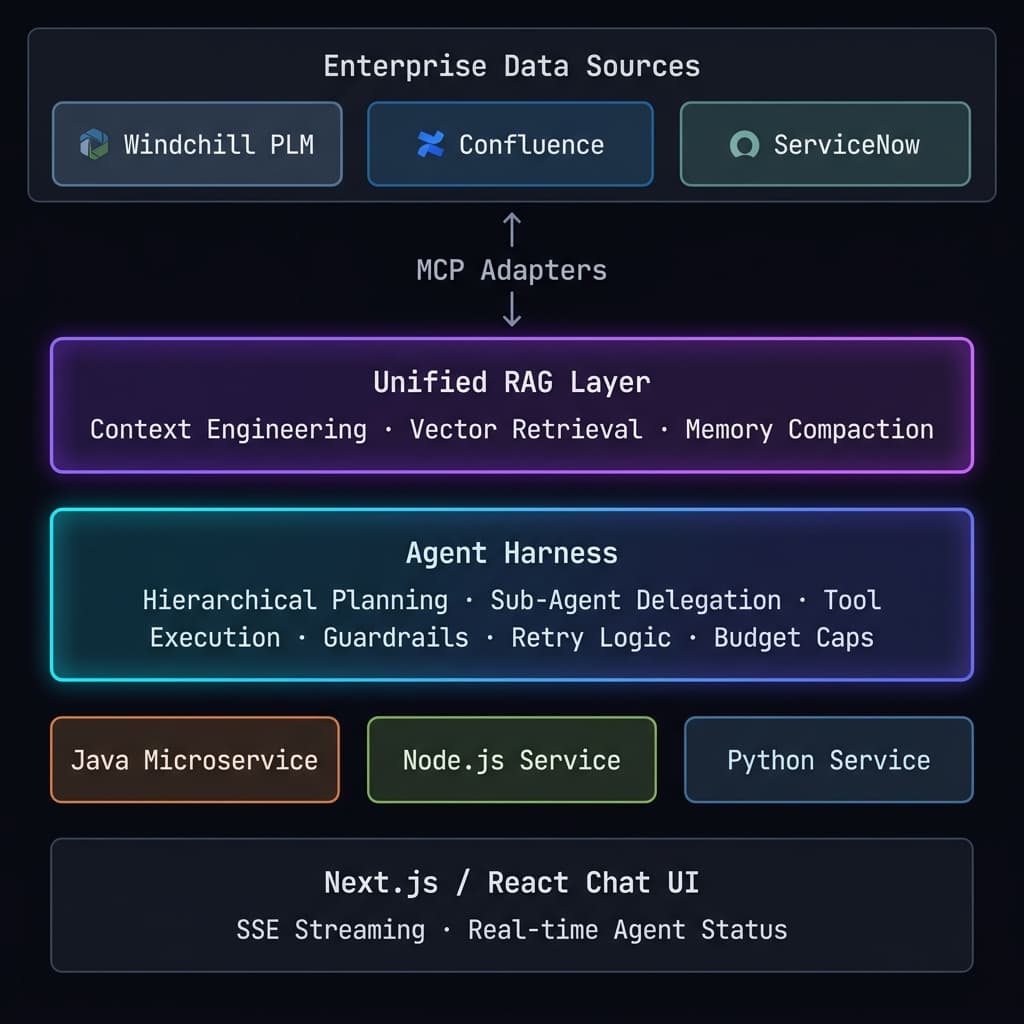
I shipped an agentic platform end-to-end at Intuitive Surgical. It uses Java, Node.js, and Python microservices behind a unified RAG layer, a Next.js/React streaming chat UI, and MCP interfaces that exposed siloed internal systems to AI agents for the very first time.
The platform was validated by rigorous eval suites built from production traces with LLM-as-Judge graders. It successfully automated 65% of support effort and was deployed across 15 internal applications.
I also engineered context memory, compaction, and retrieval to keep multi-step agents coherent across long sessions, preventing drift and hallucination as context windows fill up.
Microservices to Streaming UI
There is a lot of production software working underneath the AI layer. Polyglot microservices in Java, Node.js, and Python sit behind a unified RAG layer, all connected to a Next.js/React streaming chat UI over SSE. On the frontend I also built a reusable Angular 17 SDK at ION Group and data-rich dashboards for TradeSight and financial clients, covering the full React, Next.js, and Angular stack.
Next.js / React Streaming Chat UI
Built with SSE so the agent thought process streams live to the browser. Server components handle data fetching while the client layer renders agent status and tool calls in real time.
MCP Integration Layer
Custom MCP adapters that turn Windchill, Confluence, and ServiceNow into structured tools agents can call directly, unlocking data that was previously siloed and inaccessible.
Angular 17 SDK at ION Group
Reusable component SDK serving 25 plus Fortune 500 financial apps. Dependency Injection and Template Projection let each client customize behavior without ever forking the codebase.
Data-Rich Dashboards
Built TradeSight's portfolio dashboard with sector risk, CAGR benchmarks and tax-loss alerts, plus data visualization layers for ION Group clients. Complex real-time data, rendered cleanly.
Agent Harness, Reliability & Evals
Getting an agentic system to work in a demo is easy. Getting it to work reliably in production, at scale, across 15 internal apps, is a completely different problem. Here is how I approached it.
Hierarchical Task Planning
I architected the harness for hierarchical task planning, sub-agent delegation, and parallel tool execution. Complex long-horizon requests get broken into dependency-ordered subtasks that run concurrently where possible.
Guardrails & Safety
Multi-layer guardrails against prompt injection, hallucinations, and error propagation, with output verification and explicit human-in-the-loop checkpoints for anything high stakes.
Agent Loop and Durable Execution
Owned the full agent loop: retries, budget caps, stop conditions, output verification, and automatic recovery so agents could run long-horizon tasks without falling over.
LLM-as-Judge Eval Suites
Built eval pipelines straight from production traces with LLM-as-Judge graders and regression gates scoring retrieval precision, answer grounding, and task success. That is how we hit 65% automation confidently.
GPU Optimization & Scalable AI
Moving beyond basic API wrappers to engineer production-ready AI infrastructure. At Intuitive I architected an enterprise RAG framework that served 15 plus applications while strictly managing compute overhead.
By routing workloads to on-prem GPUs and tuning concurrent processing, I drastically reduced reliance on expensive cloud LLM APIs. The core focus was pushing the hardware limits: optimizing GPU memory allocation, batching requests, and leveraging multi-threading to achieve massive throughput gains.
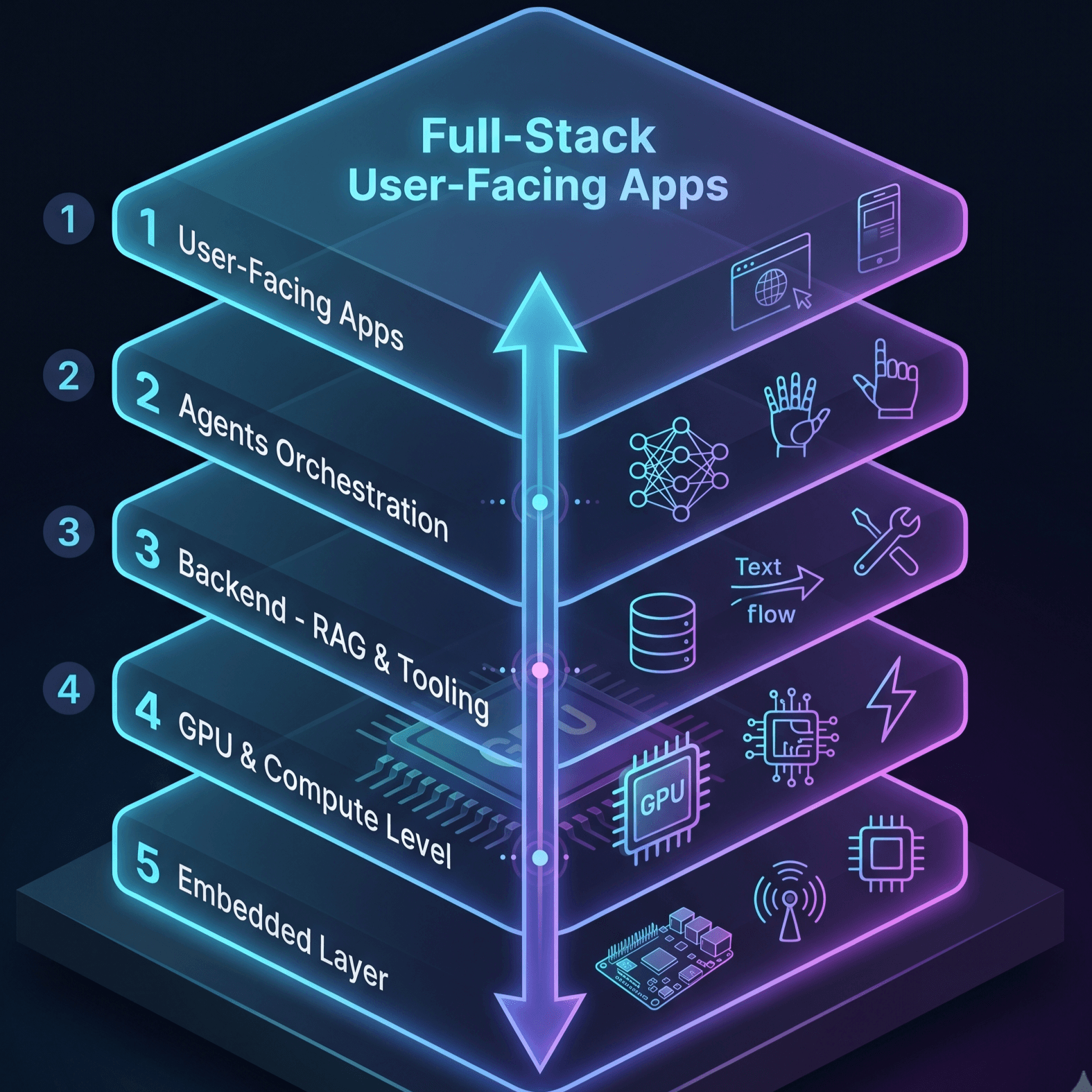
Slashed chat latency from 90s to 20s via multi-threading and optimized batched inference.
Tuned vector database retrieval and generation pipelines for high-concurrency environments.
Deployed adaptive LLM inference services on Kubernetes to efficiently manage local hardware resources.
Memory Management
Fine-tuned KV caching and continuous batching algorithms to maximize GPU VRAM utilization without triggering Out-Of-Memory errors under heavy load.
Distributed Workloads
Built load-balancing layers across Kubernetes clusters to distribute inference tasks dynamically based on real-time node availability and token processing speed.
Cost Efficiency
Replaced dependency on per-token cloud pricing with fixed-cost on-prem hardware architectures, heavily optimizing the cost per query for enterprise-scale deployments.
Reinforcement Learning from Execution Feedback
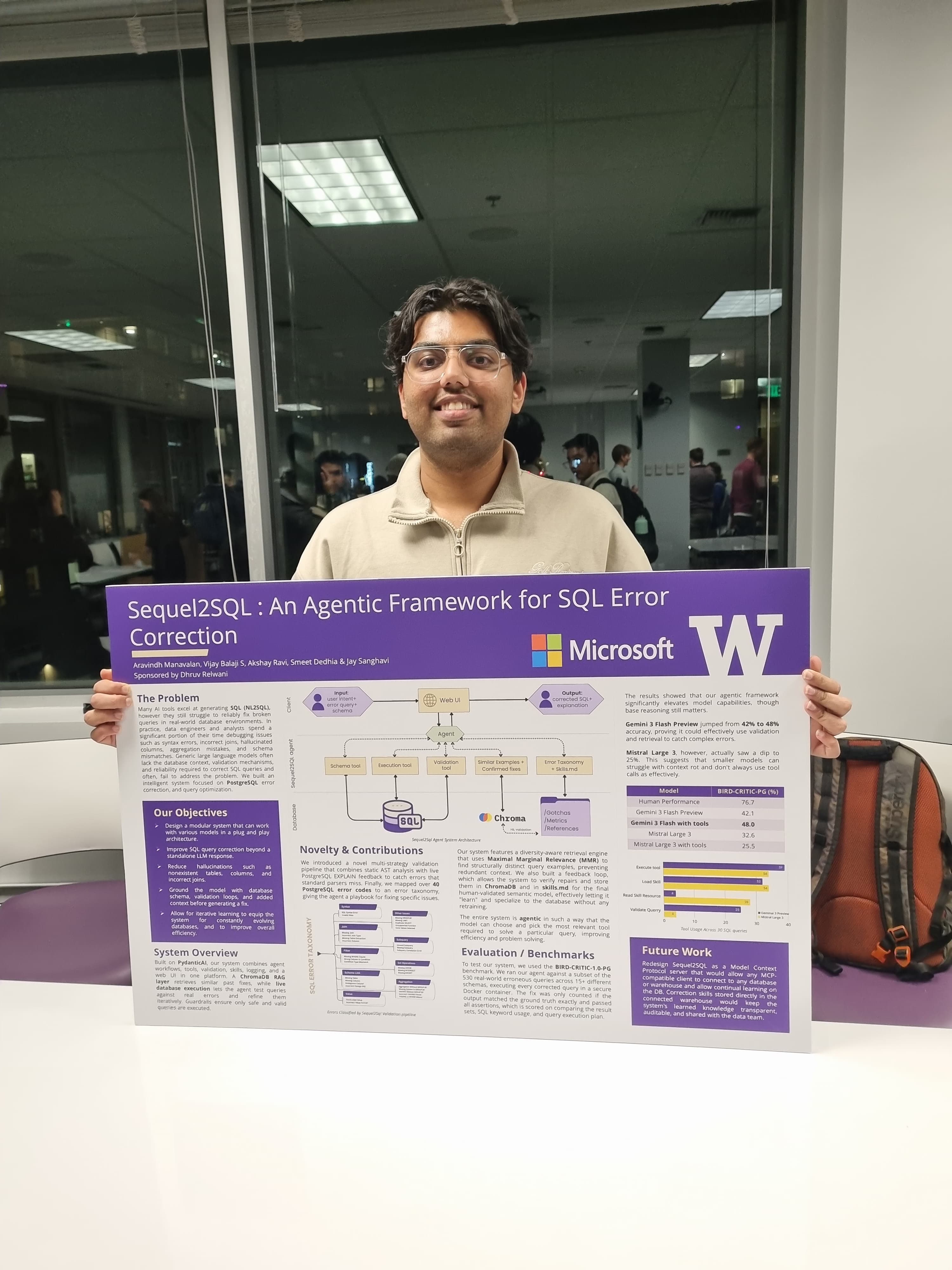
For Sequel2SQL, my Microsoft-sponsored capstone project, I built a deterministic RL environment using a live PostgreSQL engine to train LLMs in query optimization. Instead of a biased LLM judge, the reward signal came from real hardware execution metrics: EXPLAIN ANALYZE buffer reads, index utilization, and disk vs memory IO. That approach drove a 6% gain over baseline on the BIRD-CRITIC benchmark.
The LLMs were then aligned using Hugging Face TRL and DPO on RLEF datasets, with anti-reward-hacking defenses including hidden dataset replicas, LIMIT 0 detection, and EXPLAIN ANALYZE verification.
State & Action Space
- Observation: Full normalized schema, database statistics (row counts, value estimates), and the inefficient baseline query.
- Action: Two-step generation enforcing an explicit reasoning trace, followed by the optimized SQL output.
Deterministic Reward
- Query Planner: EXPLAIN extracts actual execution cost, rewarding index utilization and hash joins over nested loop scans.
- Hardware I/O: Modifiers applied based on physical disk buffer reads vs. memory hits, penalizing full table scans.
Anti-Reward Hacking
- Literal Matching: Hidden dataset replicas prevent models from hardcoding strings to pass equivalence checks.
- LIMIT 0 / Planner: Strict baseline comparison and EXPLAIN ANALYZE hardware execution, not theoretical cost estimates. The model has to actually improve query performance.
Project Apollo — RL Environments for LLM Evaluation
Built modular, sandbox-isolated agentic evaluation tasks on Inspect & Harbor, designing task seeds, rewards, and verifiers/graders to probe LLM capabilities on time-based decisions, dependency resolution, red-herring, prompt-injection, and rollback tasks. Safeguards against reward hacking built in at the environment level.
Serverless AWS Data Pipelines
University of Washington IT · Software Engineer · Seattle, WA · Mar 2025 – Present
Architected serverless data pipelines on AWS (S3, Lambda, Athena, Redshift) using Terraform to ingest and process org-wide digital assets at scale — websites, PDFs, and documents — with full infrastructure-as-code for reproducibility.
Integrated the Adobe API into the pipeline to evaluate WCAG 2.1 accessibility compliance, generating metrics and reports across all digital assets — a production AI-powered compliance pipeline, not a toy demo.
Infrastructure as Code
Terraform-provisioned AWS stack with repeatable, version-controlled infrastructure — S3 data lake, Lambda processors, Athena query layer, Redshift analytics warehouse.
Automated Compliance Pipeline
Adobe API integration auto-evaluating WCAG 2.1 accessibility across every digital asset — turning a manual audit process into a continuous automated pipeline.
Scale & Reliability
Serverless Lambda architecture scales elastically with ingestion load, processing org-wide assets with zero idle cost and built-in fault tolerance.
Building from Zero to One
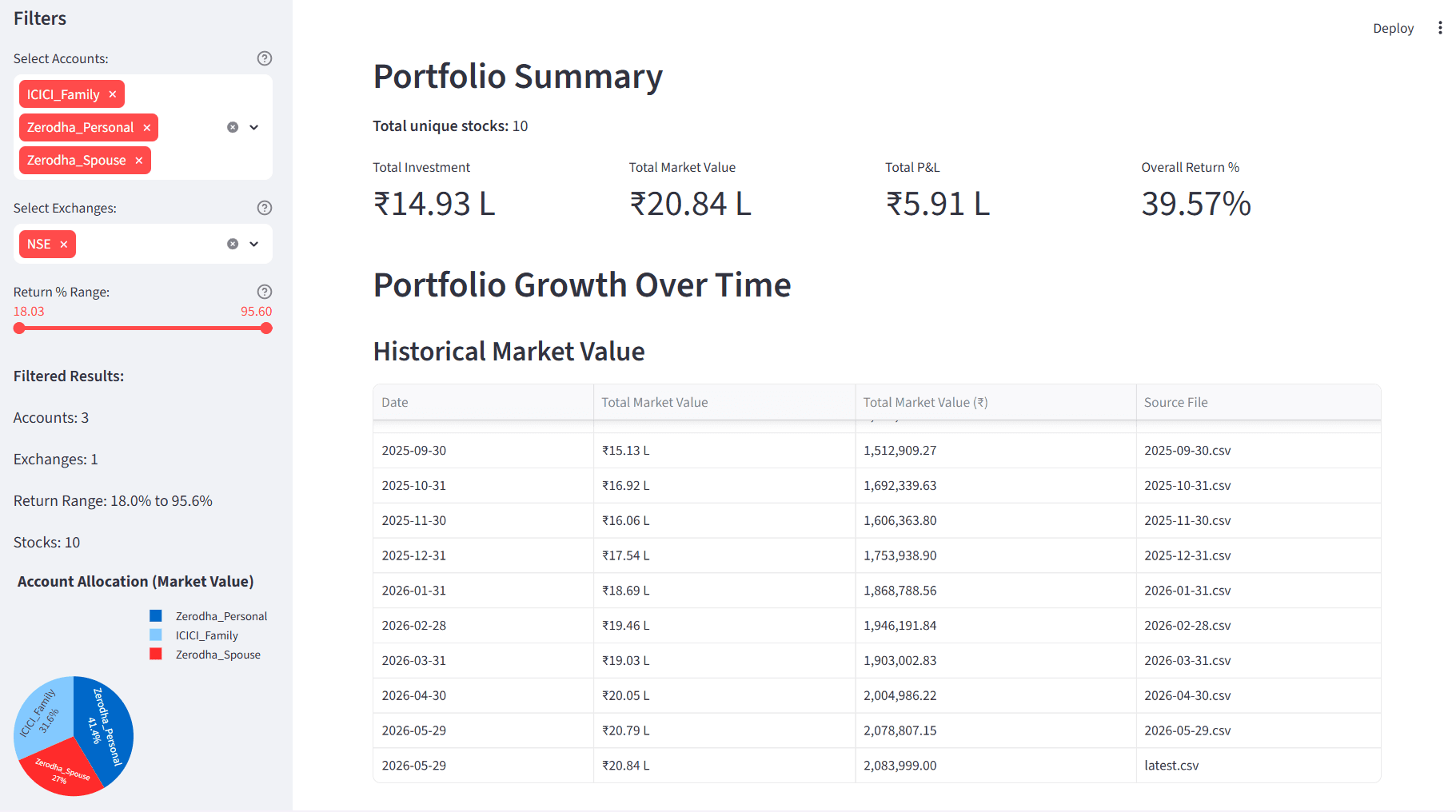
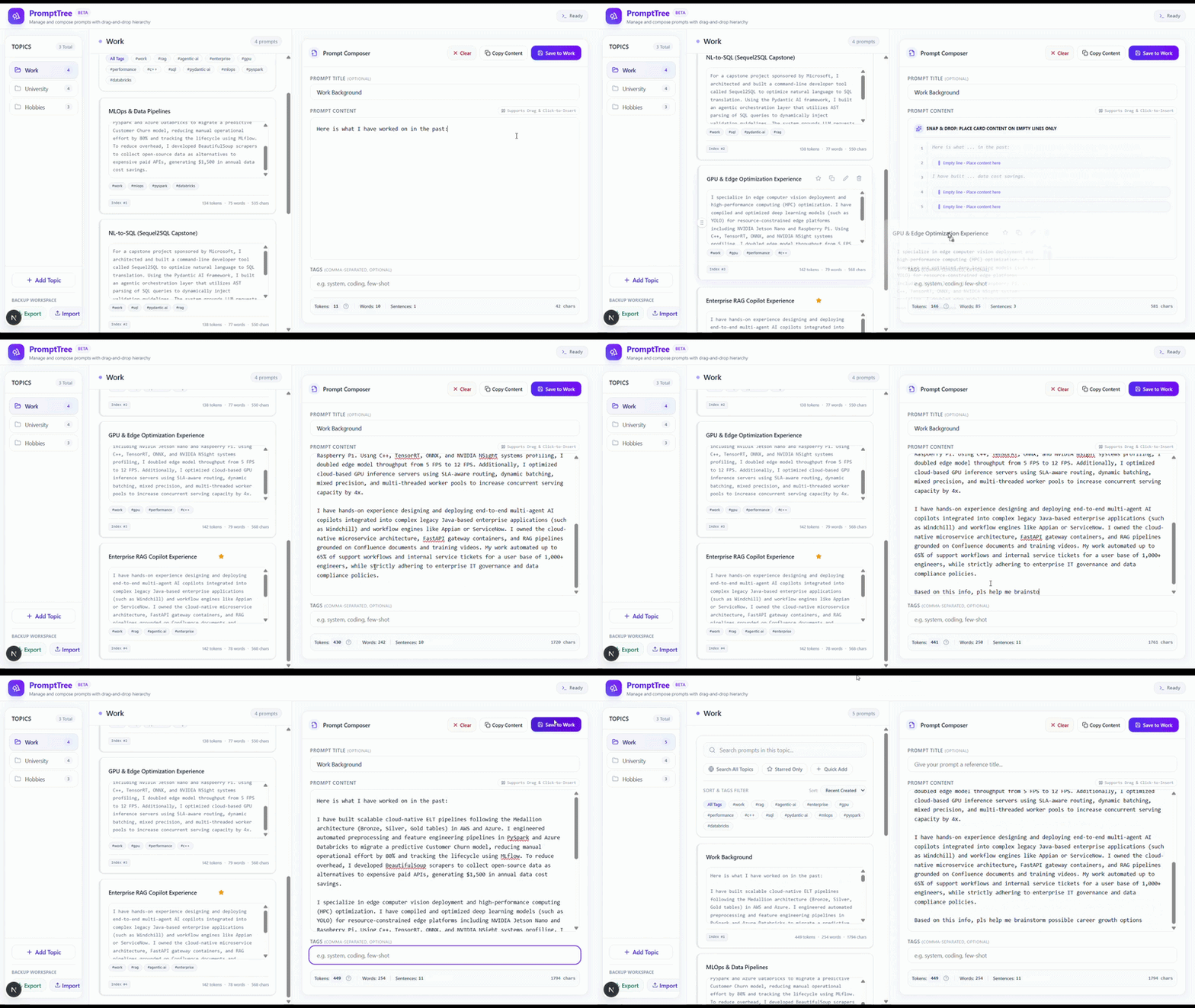
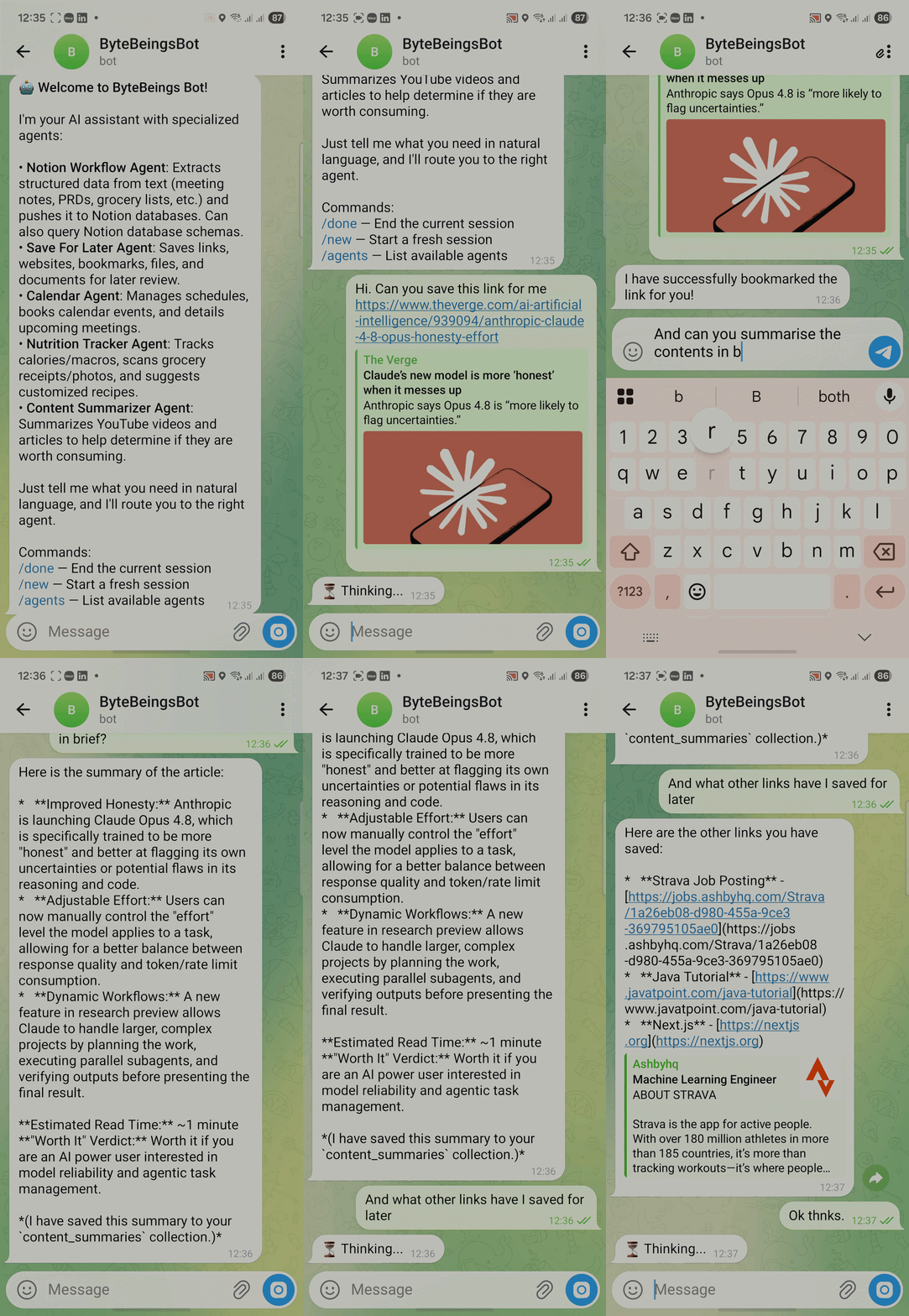
I spend my weekends building power-user apps to automate and optimize my daily life. From self-hosting wealth trackers to deploying personal AI agents, I love taking a product from zero to one.